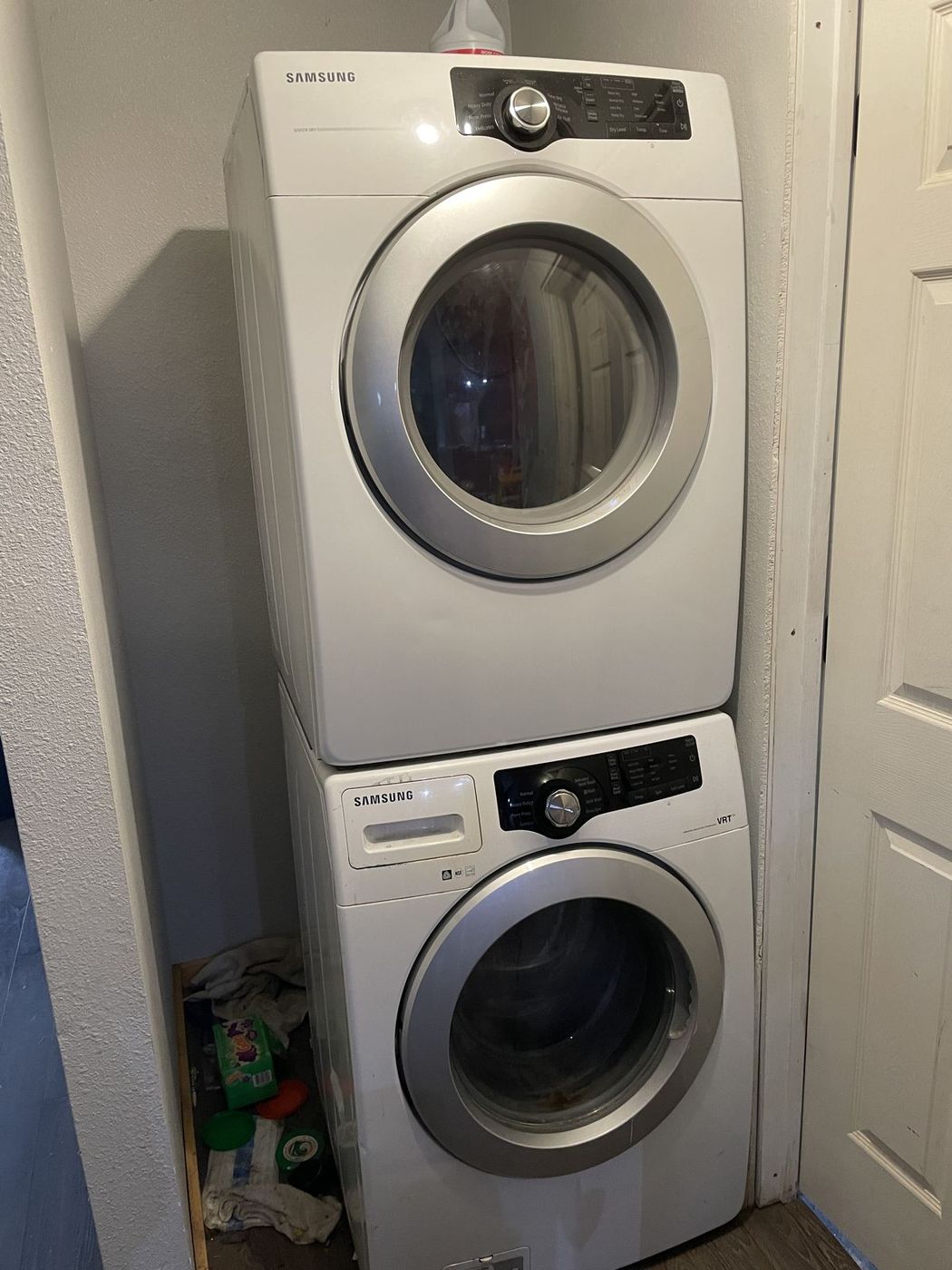
A front-load washer saves water by sealing tight, and that tight seal is exactly what lets it smell. Close the door on a damp drum for a few days in a house that stays cool and humid through most of the wet season, and the folds of the rubber door boot become a comfortable home for mildew and bacteria. In Whatcom County homes the laundry often lives in a basement, a garage corner or a closet with no window, which only helps them along.
The good news is that most odor problems are a cleaning routine, not a repair. The rest come down to a few parts that wear out, and one warning sign worth knowing.
Where the smell actually comes from
- The door boot. The bottom fold holds a little water after every cycle, along with lint, pet hair and the occasional sock or coin. That is where the black spots start.
- The dispenser drawer. Liquid detergent and softener leave a film in the drawer and in the housing behind it, which never fully dries.
- The drain pump filter. Behind a small door at the bottom front of most front-loaders, this filter traps lint, buttons and hair in a pocket of standing water.
- Between the tubs. The outside of the stainless drum and the inside of the plastic outer tub collect a gray biofilm you cannot see without taking the machine apart.
- The drain. If the smell is closer to sewer than to mildew, the standpipe's trap may have dried out. In that case the washer is not the source.
Soft water and too much detergent
Bellingham's water comes from Lake Whatcom, and it is very soft: about 21.8 mg/L of hardness, a little over one grain per gallon. Detergent works harder in soft water, so the dose marked on the cap is often more than a load needs. Extra suds cushion the clothes, rinse out poorly in a machine that uses so little water, and leave a residue that feeds the biofilm. Use HE detergent, start at the first fill line on the cap, and cut back further if you see suds left in the drum at the end of a cycle. Pods are a fixed full dose, which is usually more than a soft-water load calls for. Liquid fabric softener adds a waxy coating; use it sparingly or not at all.
A routine that keeps it fresh
- After the last load of the day, wipe the inside of the door boot with a dry towel, including the bottom fold.
- Leave the door slightly open between washes and pull the dispenser drawer out an inch so it dries. If small children or pets are around, check whether your model has a door stop for this.
- Move wet laundry to the dryer or the line right away; a load left overnight seeds the drum.
- Once a month, run the tub-clean cycle empty, with a washer cleaner or the amount of chlorine bleach your manual gives. Never mix bleach with vinegar or ammonia cleaners.
- Every few months, clean the drain pump filter. Lay towels and a shallow pan down first; a surprising amount of water comes out.
When cleaning is not enough
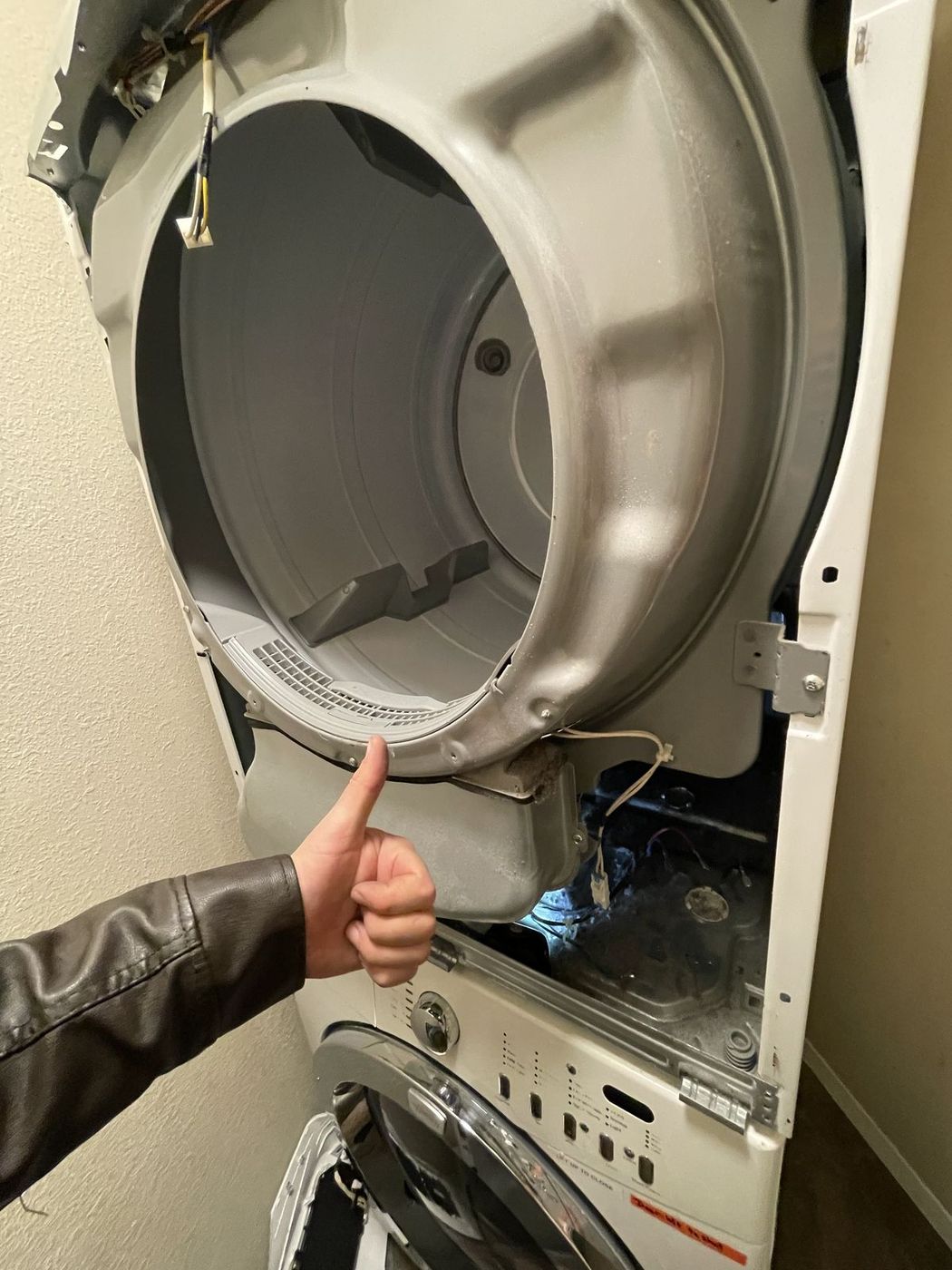
Mildew that has grown into the rubber leaves black stains that no cleaner lifts. If the boot is otherwise sound and the smell is gone, that is cosmetic. If the smell keeps coming back from a stained boot, or the boot has a tear or a hole in one of its folds, replacement is worth it. A torn boot leaks a little on every spin, usually at the bottom front, and that water sits under the machine where nobody sees it. Replacing a door boot means removing the clamp rings on the door side and the tub side, and on many models the front panel; it is routine work for our technicians.
Other repairs that cure a smell: a drain pump that no longer clears the tub, so gray water sits in the bottom between loads, and a drain hose kinked behind the machine. Both often show up as an error code or as clothes that come out wetter than they should.
When the smell comes with a noise
If the musty smell arrives together with a rumble or roar on spin, dark flakes on clean clothes, or a drum that clunks when you rock it by hand, look further. Detergent residue and constant moisture corrode the aluminum spider arm that carries the drum, and a worn tub bearing lets water past its seal. We do not replace tub bearings or spider arms in this area. When the diagnostic points there, we tell you right away and talk through whether to repair or replace the washer, before you spend anything beyond the diagnostic visit.
Our part
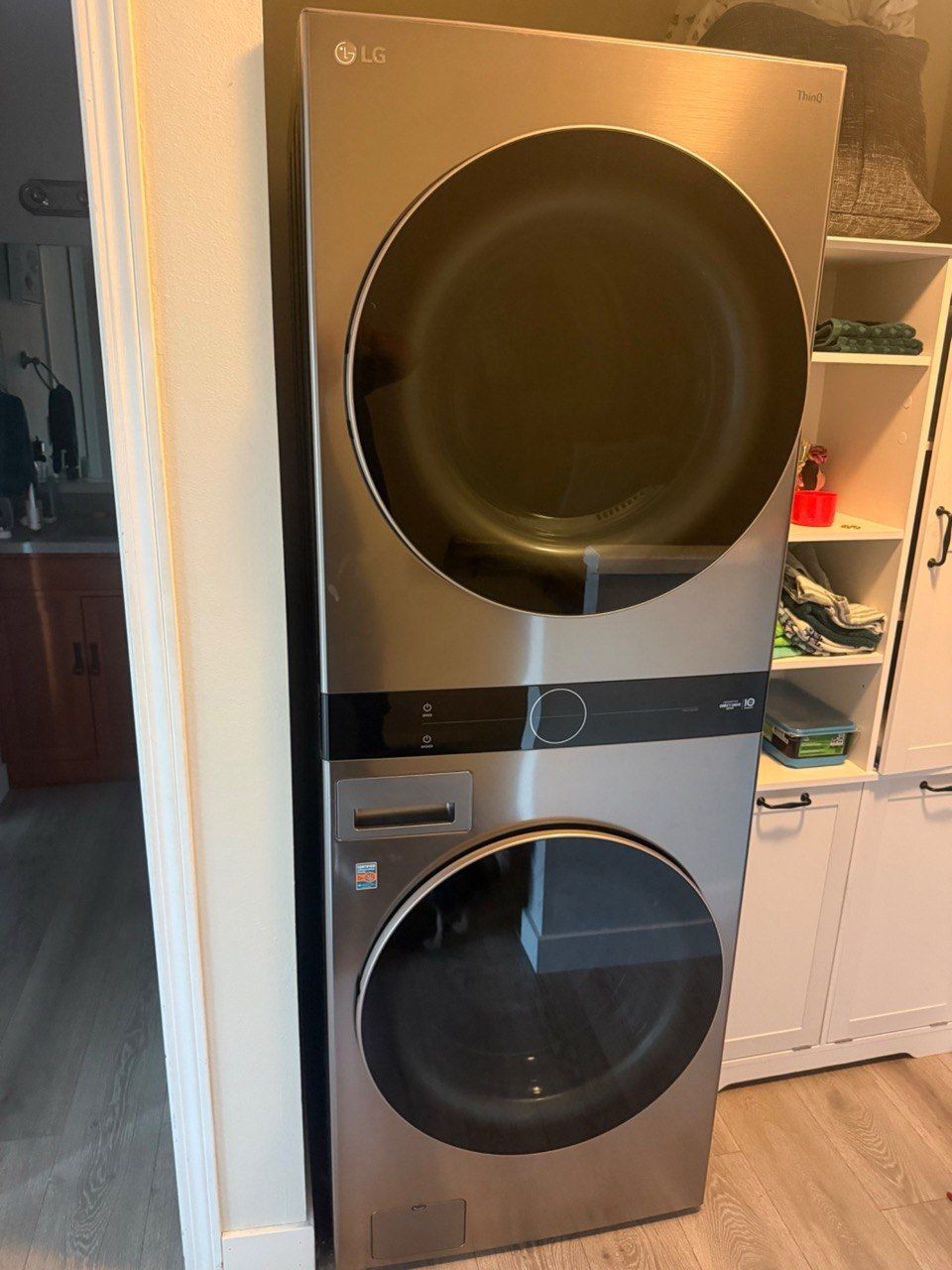
We work on front-loaders and stacked laundry centers across Bellingham, around Lake Whatcom in Sudden Valley and Geneva, and throughout the rest of our area, with no distance surcharge. The price goes on paper before any work, and the warranty goes on paper after. See our washer repair page or call (360) 525-9166.