File 1 of 6
Ranges, ovens and cooktops
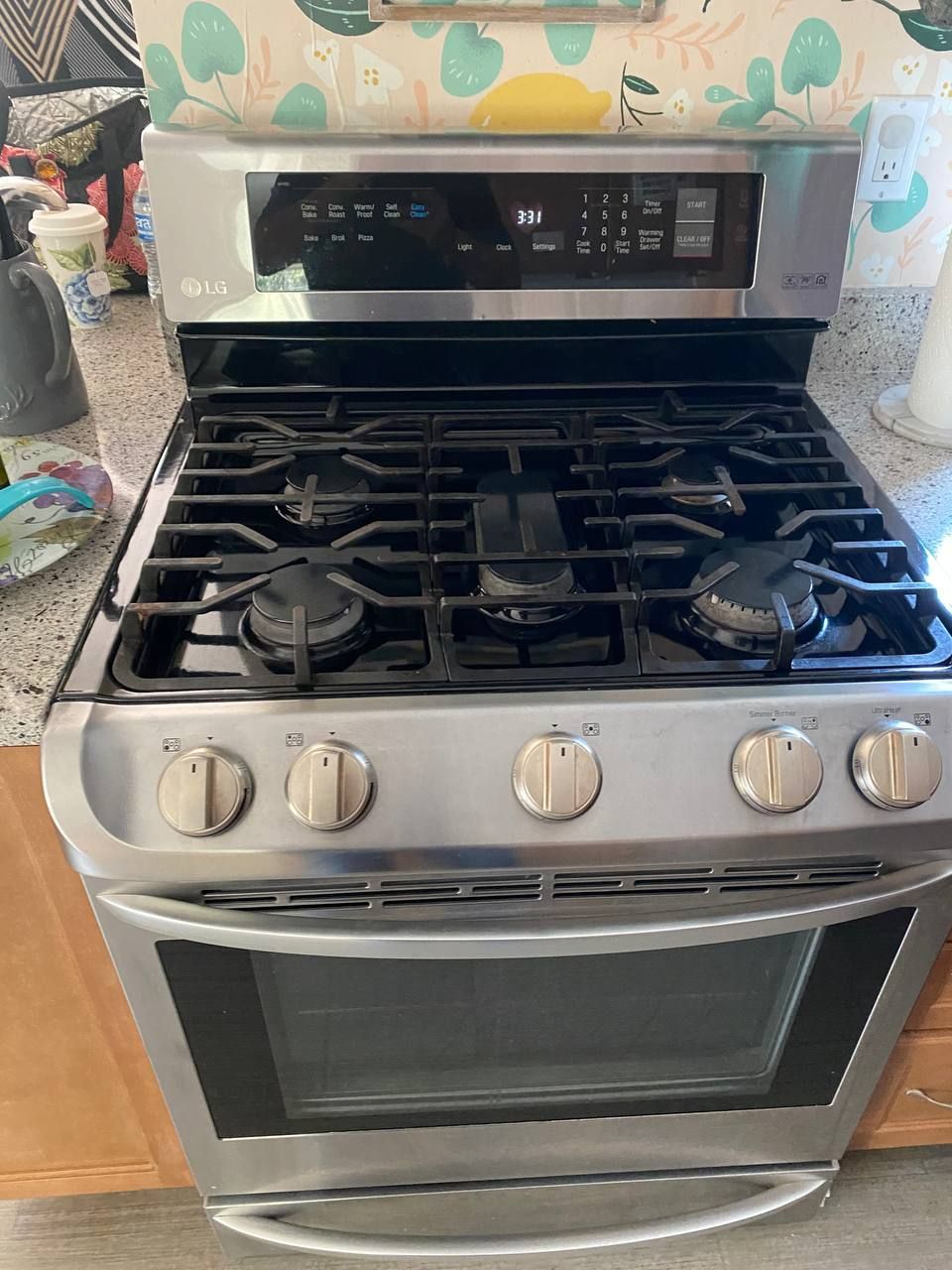
An oven element gone dark, burners clicking with no flame, a glass-top burner that will not shut off, on gas and electric ranges alike.
Ranges, ovens and cooktops, across the countyRanges, ovens & cooktops
Ovens that won’t bake, burners that won’t light
From a bake element that burned out Thanksgiving week to a glass-top burner stuck on high, we fix gas and electric ranges, built-in ovens and cooktops across Whatcom County and north Skagit, with the price on paper first.
Cooking appliances keep a calendar of their own. The heaviest stretch runs from late November through December, when ovens bake for hours, self-clean cycles get run before guests arrive, and a weak igniter or a drifting sensor finally gives out. Outages are the other trigger. When power comes back after a windstorm like the one in January 2024, which left about 5,000 households in the dark, the surge can take out a range’s control board or leave the display scrolling error codes. A range that limps along in October often fails outright with a turkey inside, so early symptoms are worth booking before the holidays rather than during them.
Fuel depends on where you live. Piped gas runs in the towns from Blaine and Sumas down to Burlington and Sedro-Woolley, while homes farther up the Mount Baker Highway cook on electric or on propane from a tank. We see standard and slide-in gas and electric ranges in rentals and newer subdivisions, dual-fuel and induction models in remodeled kitchens, wall ovens paired with separate cooktops in houses from the 1970s onward, and the compact ranges that come with manufactured homes. Older ranges with mechanical thermostats and simple switches are usually easy to bring back, while newer electronic models lean on control boards, touchpads and sensors that call for a meter and the wiring diagram. The repair logic is the same for all of them: find the part that isn’t doing its job, and prove it before replacing it.
You noticeGas oven takes ages to preheat, or never lights
Usual sourceHot-surface igniter too weak to open the oven safety valve
Our repairWe measure igniter current, replace a weak igniter, and confirm the burner lights and stays lit through a full preheat
You noticeElectric oven won’t bake; a blister or break on the lower element
Usual sourceBake element burned through, or the broil element up top
Our repairWe test resistance, replace the failed element, and run a full preheat to check that the new one heats evenly
You noticeFood burns or stays raw at the set temperature, or an F-code shows
Usual sourceTemperature sensor drifting out of range, or a loose sensor connection
Our repairWe check the sensor against its chart, replace it if it’s off, and verify with our own thermometer
You noticeA burner won’t heat, or a coil or glass-top element is stuck on high
Usual sourceFailed infinite switch, surface element, or a burned terminal block under the cooktop
Our repairWe test the switch and the element and replace whichever one fails
You noticeA gas burner clicks and clicks, or won’t spark at all
Usual sourceWet or misaligned burner cap, a shorted spark switch, or a failing spark module
Our repairWe dry and seat the cap, isolate the shorted switch and replace it
You noticeDoor stuck locked after self-clean, or a dead display and beeping keypad
Usual sourceDoor lock motor, thermal fuse or control board stressed by the cleaning heat
Our repairWe release the door safely, test the lock and fuse, and replace the board only if it fails
For ovens, we watch the appliance try to do the job it’s failing at. A gas oven gets an ammeter on the igniter circuit while it attempts to light; an electric one gets its elements and sensor read against the manufacturer’s resistance chart. We work on GE, Whirlpool, Frigidaire, KitchenAid, Maytag, LG, Samsung, Bosch, Electrolux and Jenn-Air ranges and wall ovens, along with gas cooktops and glass-top electric surfaces. Igniters, elements, sensors and switches for the common models travel with us, so a lot of ovens are baking again before we pack up. On gas ranges we also look at the burner flames for color and lift, because a yellow, lazy flame points to a dirty or misaligned burner rather than a failed part.
If you smell gas at the range, don’t switch anything on or off. Leave the house, then call 911 or your gas utility from outside, or your propane supplier if you’re on a tank. Our appliance license (07D) covers the range, the parts inside it and its cord or supply whip. When a breaker trips the moment the oven heats, we test the elements, the terminal block and the wiring inside the range, then replace the part at fault. With a wall oven, we slide it forward only as far as the repair needs, protecting the cabinetry around it. Gas valves are tested with the burner running, never guessed at from a parts list.
Range and oven repairs cover igniters, elements, sensors, surface switches and control boards, and one brand’s board can be priced far apart from one make to the next. The technician tests the range and sets one written price, and nothing gets done until you approve it; say yes and the call-out fee comes off the repair total.
Tap a tab or let the folder turn on its own.
File 1 of 6
An oven element gone dark, burners clicking with no flame, a glass-top burner that will not shut off, on gas and electric ranges alike.
Ranges, ovens and cooktops, across the county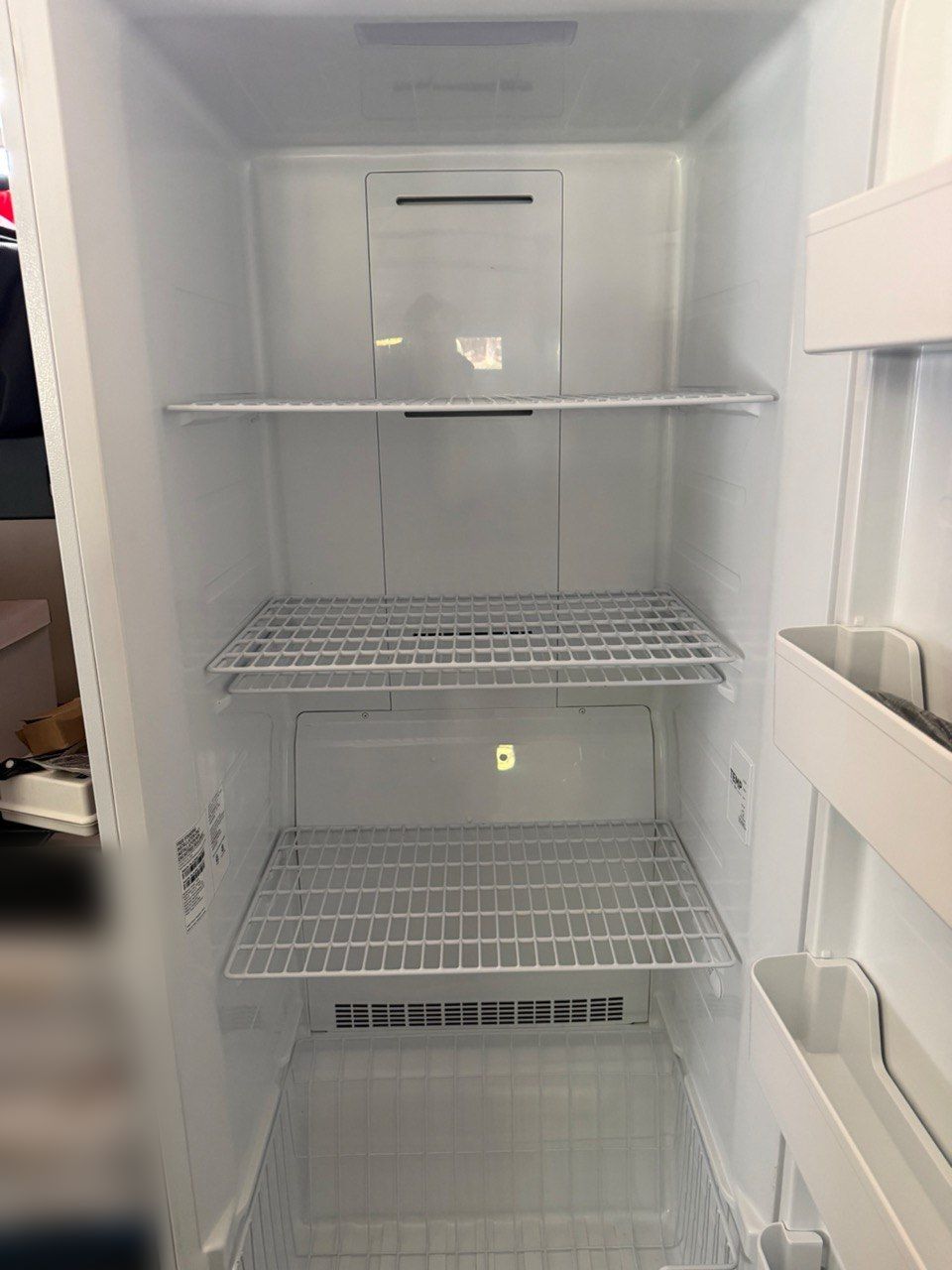
File 2 of 6
Warm shelves, frost across the rear panel, a garage freezer that quits in a cold snap: defrost parts, fans and relays get tested before we name a fix.
Refrigerators and freezers, across the county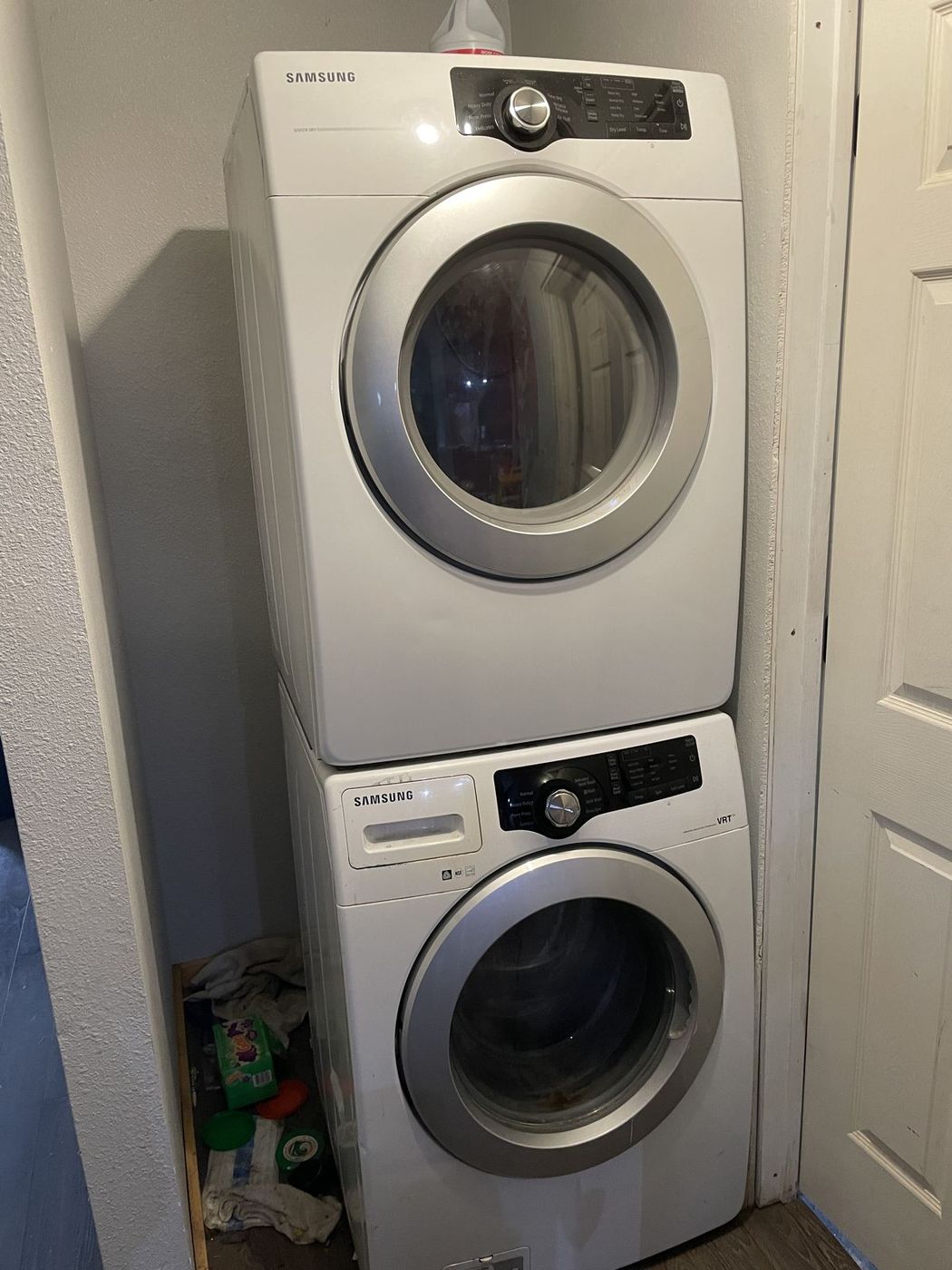
File 3 of 6
A drum that keeps its water, a lid lock stuck shut, a spin that rocks the floor: front-loaders, top-loaders and stacked towers alike.
Washing machines, across the county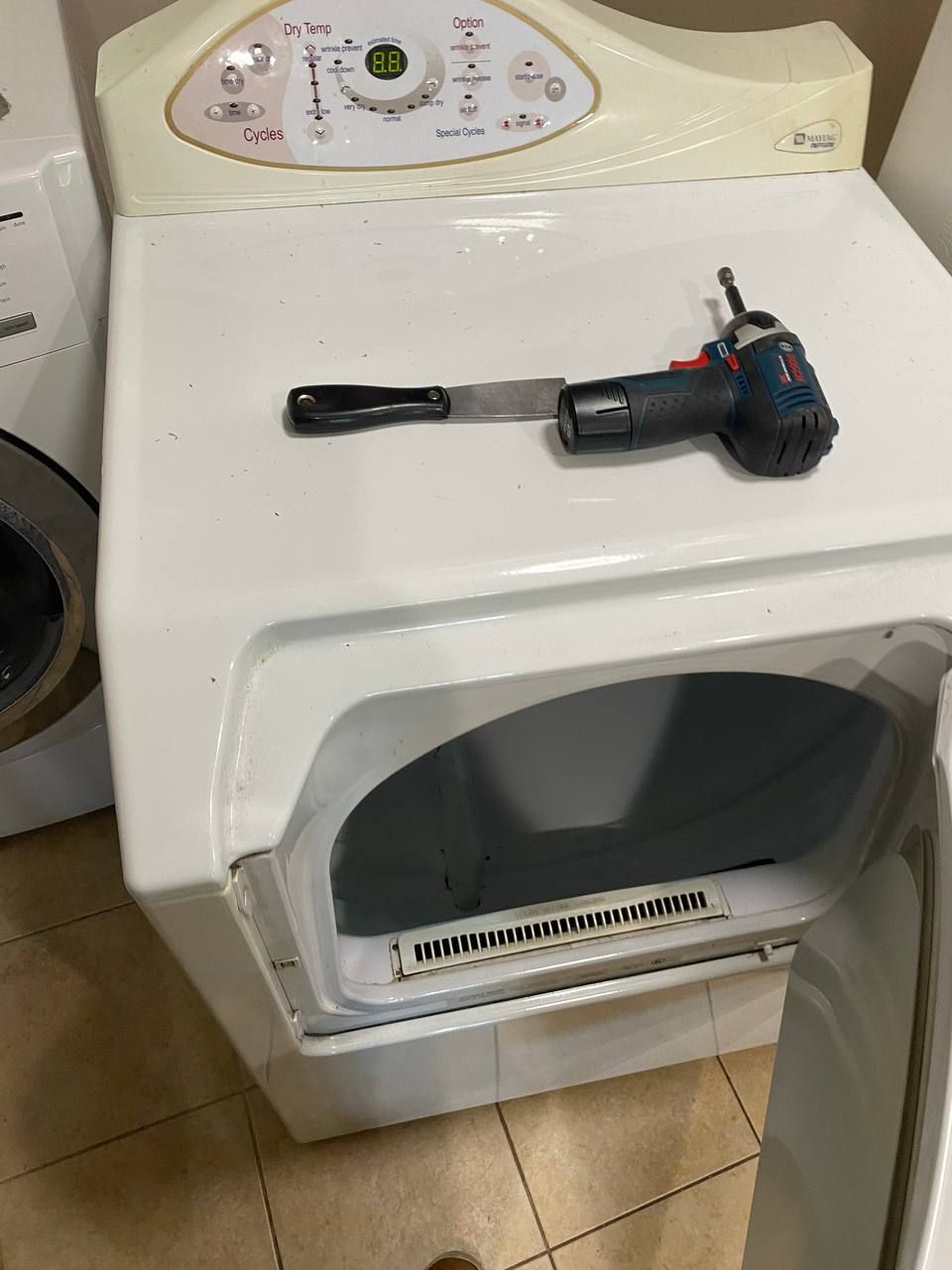
File 4 of 6
No heat, two cycles for one load, a squeal from the drum. Airflow at the vent hood gets checked on every dryer call.
Clothes dryers, across the county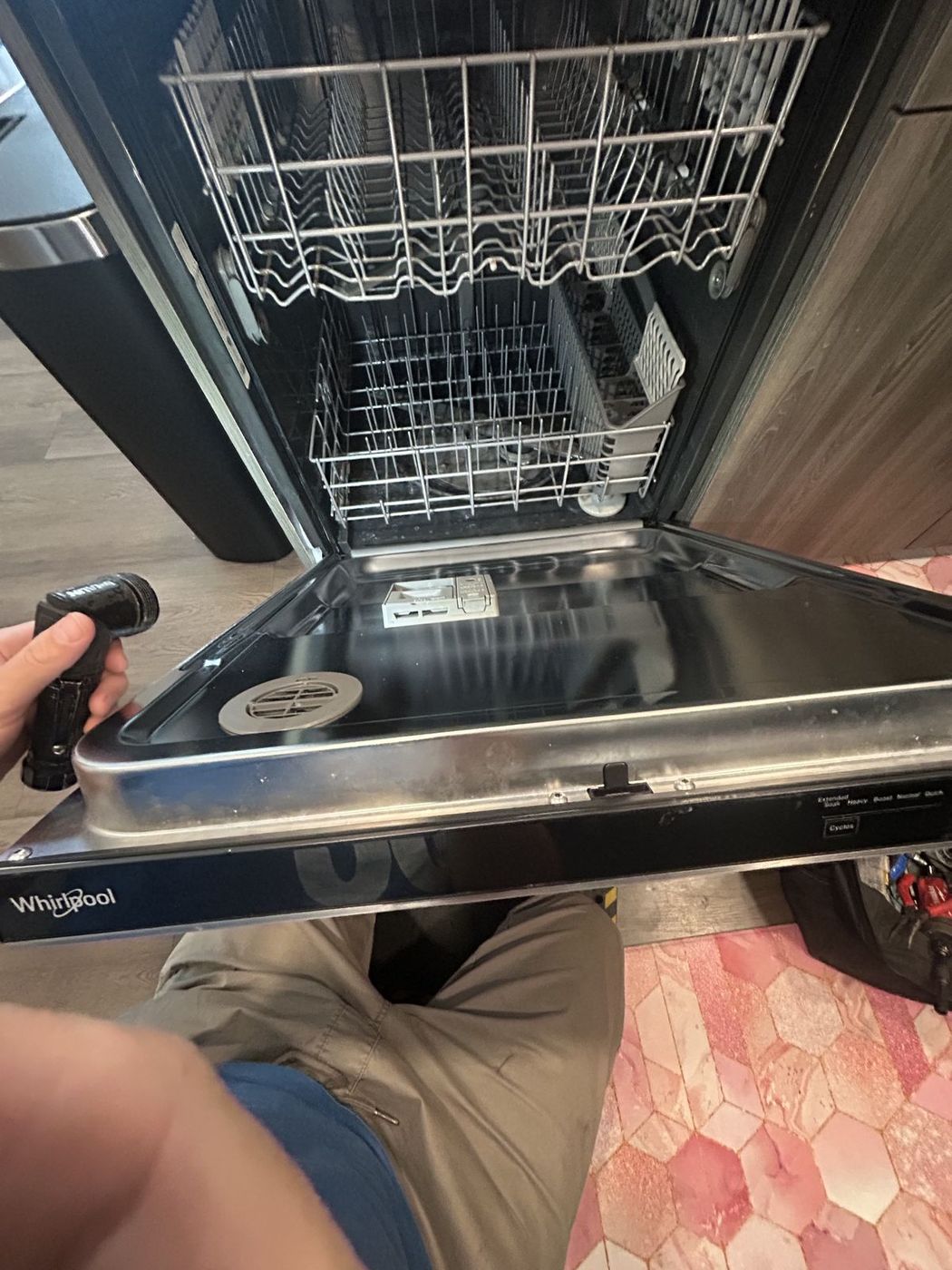
File 5 of 6
Grey water left behind, glasses turning cloudy, a drip by the toe kick, a panel that blinks and sulks.
Dishwashers, across the county
File 6 of 6
Empty bins, thin hollow cubes, a fill line frozen in an outflow week: valve, line and module, tested in order.
Ice makers, across the countyCooking
Gas burner clicks but won't light, flame is weak or yellow, or the oven won't heat? Safe checks, igniter vs spark faults, and when to leave the house.
We’d suggest doing it a few weeks earlier, or cleaning by hand. Self-clean pushes the oven far hotter than any recipe, and that heat is hard on the door lock motor, thermal fuse and control board. If one of them fails during the cycle, the door can stay locked with the turkey still to come. Running it early leaves time to sort out a problem.
Yes. A range set up for propane has its own orifices, but the igniter, valve and burner diagnosis is the same as on natural gas. Many homes in Kendall, Maple Falls, Glacier and rural Skagit cook with propane. If a propane range smells of gas, get everyone out and phone your propane supplier or 911 from the street before you call us.
Usually. First we check the temperature sensor against its chart, since a drifting sensor is a common cause and replacing it solves the problem. If the sensor reads correctly, many electronic ovens allow an offset adjustment in the settings, and we can set it while we’re there. Older dial ovens may need the thermostat checked. We verify the result with our own thermometer either way.
Most often a bake or broil element has shorted to its sheath, and the breaker trips the instant power reaches it. A damaged terminal block or a pinched wire inside the range can do the same. We test those parts with a meter and replace the one at fault.
Frequently, yes. Ranges are simpler than most appliances, and an igniter, element, switch or sensor brings an older one back to full use. A plain gas or coil-top electric model can run for decades with occasional parts. The case for replacing grows when a discontinued control board is the problem, or when a glass top is cracked, and we’ll tell you if that’s where things stand.
Set up the visit
A range that won’t cooperate is one call away at (360) 525-9166, Monday through Sunday, or use the online form.
Book a visit
Leave a few details and a dispatcher rings you back to agree on an arrival window. Someone picks up all week, and a request sent before mid-morning has the likeliest shot at a visit the same day.
Prefer to talk? (360) 525-9166 · Calls daily 8–7
State records
Both credentials are public state records. Tap a card for details, or look the numbers up yourself on L&I Verify.
Check our licenses yourself