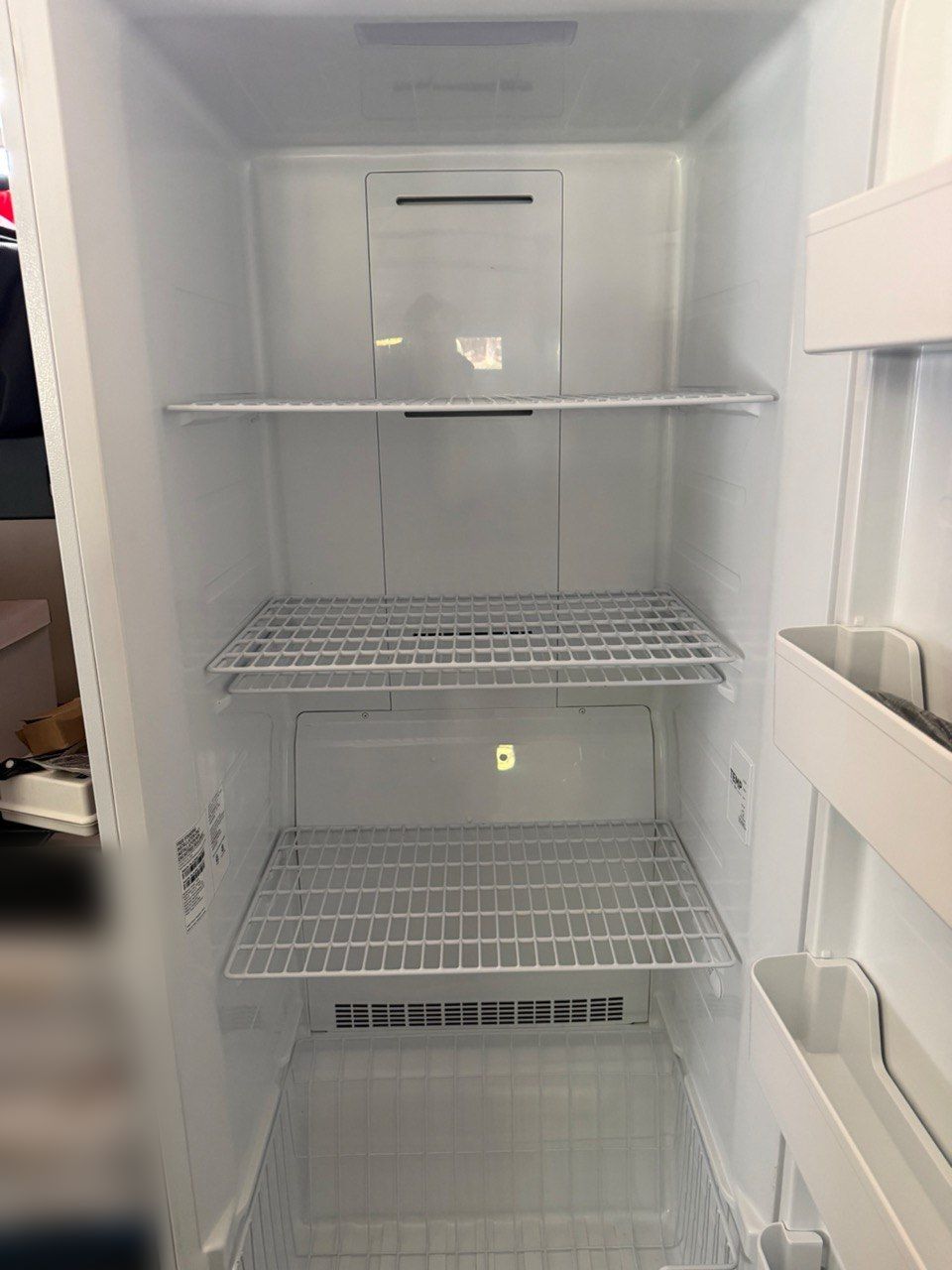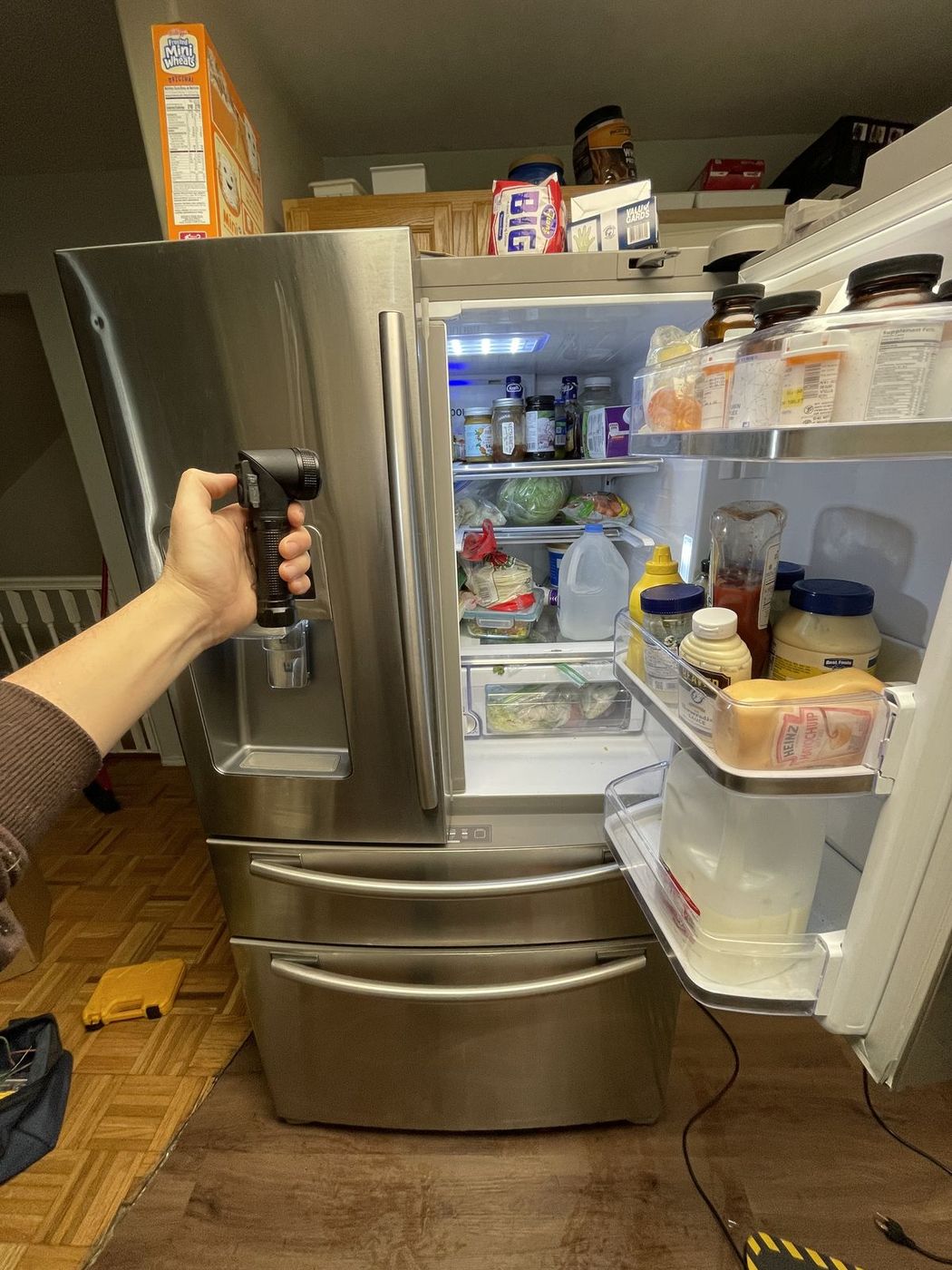
Every few winters, cold air from the British Columbia interior pours down the Fraser River valley and fans out across Whatcom County. In January 2024 that northeast wind gusted past 50 mph in the northwest corner of the county, and Bellingham set record lows of 9°F, 3°F and 7°F on consecutive days. Calls about ice makers follow mornings like those almost on schedule. The freezer is cold, the ice maker hums or clicks through its cycle, and nothing drops into the bin. Most of the time the ice maker is fine. The water simply cannot get there.
Four places the water can freeze
Water for an ice maker travels a surprisingly long way, and much of the trip happens in the coldest parts of a house.
- The supply line. A thin copper or plastic line runs from a valve under the sink, in the basement or in the crawl space to the back of the refrigerator. Where it crosses a vented crawl space, hugs an outside wall or runs along a garage floor, wind-driven cold can freeze it solid.
- The inlet valve. The solenoid valve that meters each fill sits at the bottom rear of most refrigerators, close to the floor. In a garage that drops below freezing, the water standing in it freezes, and the expansion can crack the plastic valve body.
- The water filter. Cartridges in the base grille or behind the refrigerator hold water too. A housing that froze may look fine and then weep once it thaws.
- The fill tube. The last few inches of tubing pass through the freezer wall into the ice maker. If the valve lets a drip through after each fill, or fills arrive slowly because pressure is low, that water freezes in the tube and plugs it. Many refrigerators wrap this tube with a small heater for exactly that reason; when the heater fails, the plug grows with every cycle.
Why a cold garage stops the freezer too
Garage refrigerators have a second problem that has nothing to do with the water line. Many standard models, especially simpler top-freezer designs, decide when to cool based on a sensor in the fresh-food section. When the garage itself is near freezing, that section never warms enough to ask for cooling, so the compressor barely runs and the freezer drifts warmer. Ice production stops, ice cream softens, and the refrigerator looks broken when it is really reacting to the room. Installation manuals give the lowest room temperature a model is built for, and for standard refrigerators it sits well above freezing. Models sold as garage-ready handle colder spaces with separate controls or a small heater in the fresh-food section.
What you can safely check
- Confirm the ice maker is switched on and its shutoff arm or sensor is not stuck in the full position.
- Find the supply valve where the line starts and make sure it is open.
- Try the door dispenser. If it gives no water either, the freeze is upstream: supply line, filter or valve. If the dispenser pours normally and only the ice maker stays dry, the fill tube is the usual suspect.
- Look under and behind the refrigerator for water. If you find a drip, close the supply valve and leave it closed until the leak is found.
- Close the garage door and let the house warm back up before you judge anything.
Skip heat guns, torches and anything poked into the fill tube. Plastic tubing and valve bodies soften or split, and a cracked line behind a refrigerator can leak for days before anyone sees the floor.
What we do on the visit
Once the line has thawed, our technician tests the inlet valve's coil, looks for cracks, and checks that the valve shuts off cleanly. We confirm the water reaching it has enough pressure for a full fill, test the fill tube heater, and run the ice maker module through a harvest. A valve that seeps after each fill is the reason many fill tubes freeze in the first place, so replacing it often fixes the cause rather than the symptom.
Getting through the next cold snap
- Insulate exposed supply lines in crawl spaces and garages, and route the line away from an outside wall where you can.
- In a garage that freezes, turn off the ice maker and close its supply valve for the season, or choose a garage-ready model when the time comes to replace.
- Change the water filter on schedule. A partly plugged cartridge slows each fill, and slow fills are the ones that freeze in the tube.
- In a second home or cabin, shut off the ice maker and its supply valve before you leave for the winter, and empty the bin so it cannot fuse into one block if the power drops.
That last point matters more here than in most places. About one home in five in Birch Bay sits empty for part of the year, and many cabins along the Mount Baker Highway are second homes. One of our technicians is based out along that highway, so Glacier, Maple Falls and Kendall are regular stops, and so are Point Whitehorn and Birch Bay Village. More on our ice maker repair page, or call (360) 525-9166.